We need a tech future worth clapping for
What is a vision for the future you would be excited about?
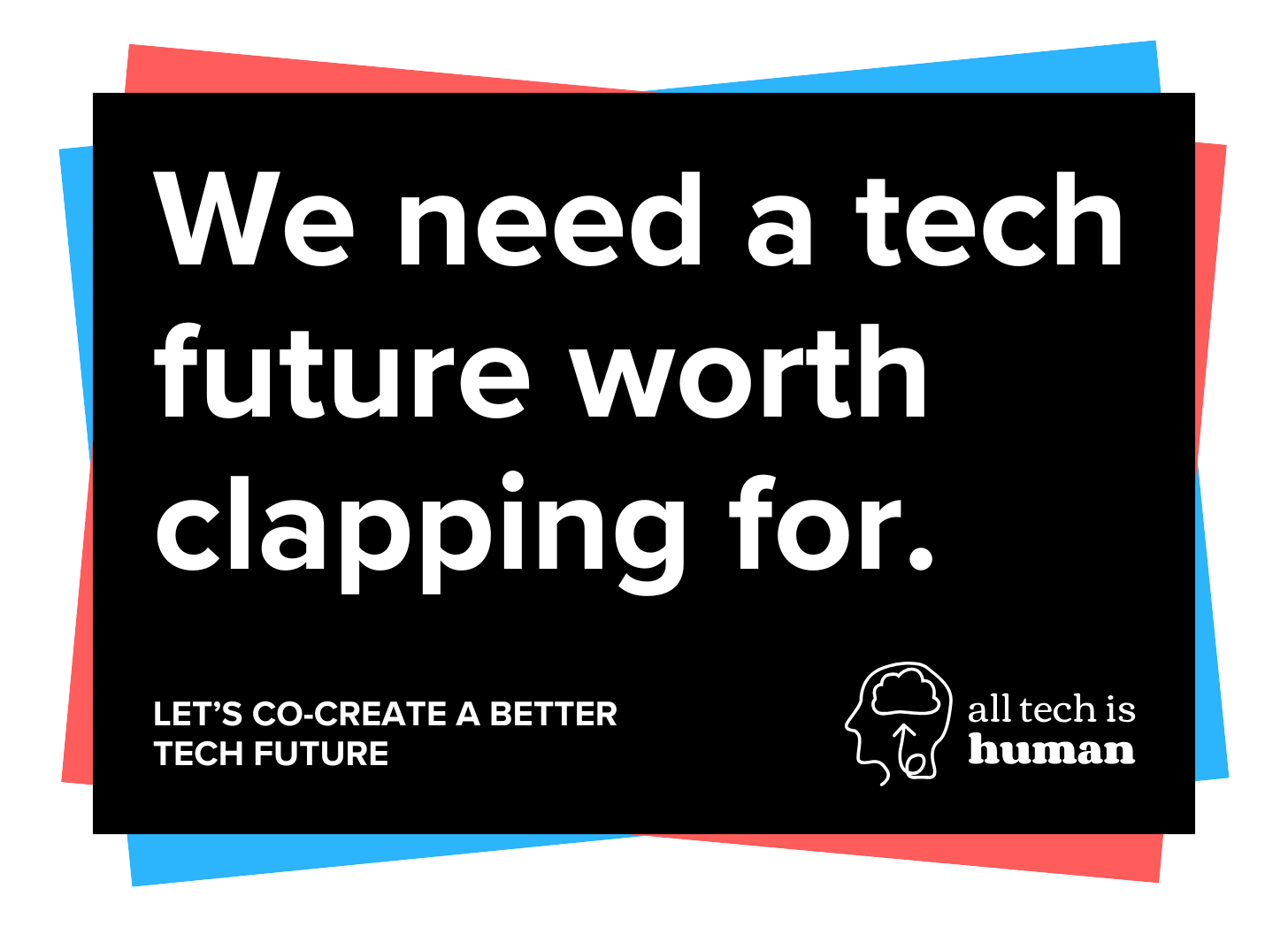
As you may have seen in a few recent viral videos, booing at the mention of AI during graduation speeches is having a moment. The most famous occurred at the University of Central Florida two weeks ago, with students booing when the speaker mentioned that AI is “the next Industrial Revolution.”
When the speaker mentioned that AI was not part of daily life just a few short years ago, the students enthusiastically clapped. The speaker was clearly taken aback by the reaction.
I wasn’t shocked, and I imagine many of you reading this were not shocked as well. But it certainly caused me to reflect on how one’s age and upbringing dramatically color where we fall on the spectrum of hope towards building a better tech future. My past was filled with moments of awe, excitement, and hunger as I thought about how tech would change our lives. I have memories of social media and emerging technology enriching my life. So while that is certainly not the present situation, my memories deeply influence my belief in what is possible.
But to a recent graduate, their past was after social media started going sideways. It’s much harder to believe that a better tech future is possible when there isn’t a memory in your past where the tech in your life felt positive.
I think that’s why intergenerational collaboration can be so important; to be siloed in youth robs one of history and potential, and to be isolated from youth prevents one from experiencing the true gravity and vulnerability that others feel.
That intergenerational mismatch was in full effect during the graduation boos, along with the clapping when describing an AI-free past. We can’t go back in time, however. Nor should we. But I certainly want a tech future worth clapping for.
-David Ryan Polgar, Founder of All Tech Is Human
In your opinion, what is a tech future worth clapping for?
We want to hear from you, and we’ll be displaying some of your submissions in future newsletters, in our next Responsible Tech Guide, and at our Responsible Tech Summit in the Fall.
"One of the red flags is when anyone says that this future, whatever it is, is inevitable. That is a red flag, because it's making you feel scared, it's making you not ask questions, it's a kind of conversation stopper.” -Carissa Véliz, author of Prophecy. From our recent livestream.


Two upcoming livestreams for you to join:
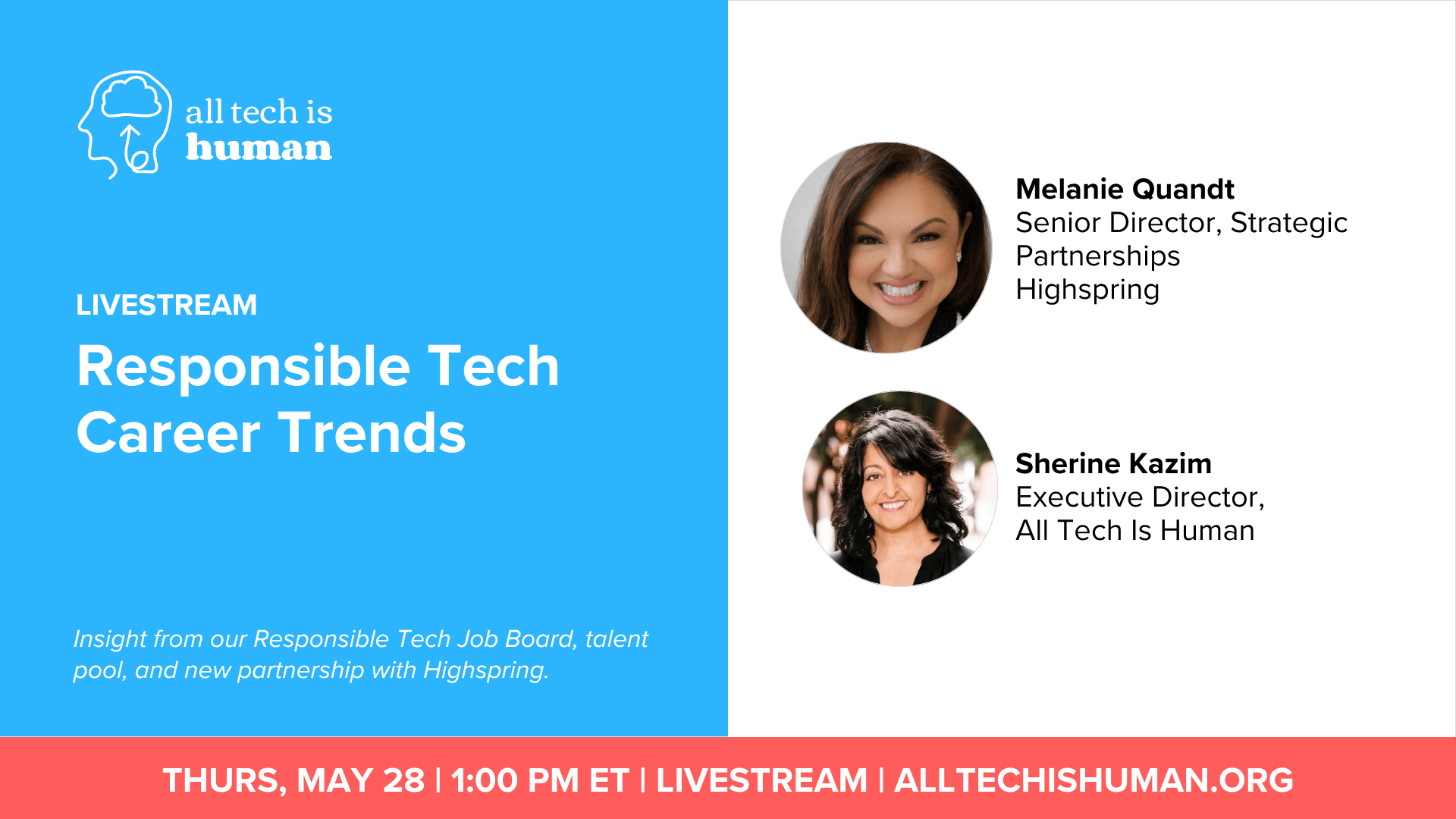
We’re exploring the evolving landscape for careers in Responsible Tech. Join us!
Roles related to Trust & Safety, Responsible AI, and Public Interest Technology have rapidly evolved. With our new partnership with Highspring, we are now able to have a real-time analysis around trends and pain points. We do this by analyzing changing roles on our Responsible Tech Job Board, insight from our large talent pool, and the over 200 responses we received from our recent survey. This session will feature an exclusive look at the results, with guest Melanie Quandt (Senior Director of Strategic Partnerships at Highspring) to share her expertise.
We’ll be exploring the skills, roles, and structural trends defining the future of work in AI governance, Trust and Safety, and more. If you are interested in where Responsible Tech roles are headed, this livestream is for you.
We recently released a post on Decoding the Responsible Tech Job Market: Why Transferable Skills and Transparency Are the New Hiring Signals from our survey results.

How can we move from harm mitigation to intentional design?
Join our livestream with Kristin Hansen, Co-chair of the global Council on Technology and Social Cohesion and Executive Director of Civic Health Project. The discussion will dig into the insights, takeaways, and next steps stemming from the recent Council on Technology and Social Cohesion Expo.
We’ll move beyond the traditional framing of merely reacting to and mitigating technological harms, and explore proactive pathways for building digital spaces and governance structures that intentionally foster social cohesion, strengthen democratic civic health, and bridge societal divisions.
Workshops, roundtables, and in-person gatherings:

All Tech Is Human is returning to London! If you’re in the area, please join us at our Responsible AI Community Mixer on June 2 at the historic Old Spitalfields Market. Join us for drinks and music, and say hello to David Ryan Polgar and Sherine Kazim from the team (David will be speaking at SXSW London on June 3 for a Reclaiming AI for the Public Good panel.)
On June 18th in NYC, we’re convening a small group of senior foundation and nonprofit leaders for a candid dialogue about what AI adoption actually looks like at the leadership level: where it’s working, where the governance gaps are real, and how funders and implementers can move in closer alignment. In collaboration with Forum One, and being held at Idealist.org’s headquarters. This builds on a similar roundtable we held in Washington, DC in April.

How is the “Agentic Shift” affecting the workplace? In collaboration with the Notre Dame-IBM Tech Ethics Lab, we are organizing two workshops in NYC on July 13 and 14 (one for mid-level, one for executives). These workshops will lead to the creation of a whitepaper arriving in the Fall, and are being led by Jen Weedon from our Braintrust.
How do we ensure the responsible development of quantum computing and artificial intelligence? If you are interested in the scientific utility of quantum simulations or the latest in AI governance, you’ll want to join our collaborative gathering with the Finnish Consulate in New York on July 15, which is bringing together global leaders from industry, academia, and the public sector. Curated for 75 individuals, we’ll conclude the panels, lightning talks, and networking with a reception at the Finnish Residence.
ICYMI:
🤔How do we protect kids online without building a pervasive ecosystem of digital surveillance? Read our new piece by Emma Hatheway (intern at ATIH) that tackles this question by diving into the shift from platform-specific age gates to device-level age verification.
✍️Our friends at the Mozilla Festival have an open call for proposals, due by May 24. MozFest is community-led and community co-designed, with a team of Co-Curators from across the globe designing festival tracks. Learn more here.
🎊On May 26, the Barcelona community (ATIHx Barcelona) is putting together a Responsible Tech Unconference! Register here.
📆On June 17, the Aspen Institute and the Patrick J. McGovern Foundation are holding Shared Futures: The AI Forum at The Times Center in Manhattan, along with being livestreamed. All Tech Is Human’s David Ryan Polgar and Sandra Khalil will be there. Reach out to us if you will be there as well.
📺Did you miss our recent livestream? Watch the recording above, where we spoke with Carissa Véliz, Author of Prophecy: Prediction, Power, and the Fight for the Future, from Ancient Oracles to AI.
📖Are you reading a good book? Nominate it for our Responsible Tech Summer Reading List
“Predictions can be an educated guess, they can be wishful thinking, they can be a power play in disguise, they can be many things. But whatever they are, they are never a fact, because facts belong to the past. And the future is unwritten.”-Carissa Véliz
👏Let’s co-create a tech future worth clapping for.
⭐ Our projects & links | Responsible AI courses | Email us | Donate
🦜 Looking to chat with others in Responsible Tech after reading our newsletter? Join the conversations happening on our Slack (sign in | apply)